
Jim:
The river has always been my happy place. Any river. Anywhere. However, one specific region always comes to mind: the Dora, MO area, where there are as many watering holes as names in the phonebook. I was fortunate enough to call Dora “home” for a number of years. Mary and I were even neighbors for a short time. What a small world. (Even smaller when you’ve lived in Dora for any amount of time.) It’s a different kind of living when the only grocery store in a thirty-mile radius is a gas station (Roy’s). You’re more in touch with your roots, more in touch with your neighbors, and more in touch with strangers, even. Rhonda, who basically runs Roy’s, employs a brand of kindness that you just don’t see in the city. In spite of the world today, small rural gems like Dora maintain a difficult-to-put-your-finger-on sensibility that’s a rarity even in other parts of the U.S., what once might have been called “southern hospitality.” And then there’s the river.
Two major riverways and dozens of tributaries scrabble these hills and hollers: The North Fork of the White River and Bryant Creek, the latter a river in its own right. The region’s lush beauty is home to a multitude of wildlife and fish species, including some of the best trout fishing in the country. Whether I’m interested in fishing or just knocking off a few hours tubing under the summer sun, there’s no place like home.

Jim:
Our unexpected theme of Issue 5 is something to do with Rivers—and so, by extension, Change. Tell us a little about the evolution of the Ozark County, MO area over the years.
Mary:
One of the biggest changes I have seen and lived through is moving to the Ozarks when the area was still catching up with the rest of the world and adapting to modern times. My family was going through our own adjustments moving to the area from Chicago during the back-to-the-land movement in the early 1970s. The transition was harder for my parents than it was for me and my sister (we were pretty young), but we all adjusted to rural living.
By the time we came to the area, most everyone had electricity, but not telephones. There was limited television; we got three channels. Radio stations were pretty much limited to country music, unless you could manage to pick up WLS AM at night to listen to rock music.
It was a great gift my dad gave us, making the brave move of relocating his family to the Ozarks. We didn’t know what to expect. We didn’t have any family in the area; we only knew a few people. It was life-changing for all of us. Fifty-five years later, each of us still calls the Ozarks home. I can’t imagine still living in Chicago.
Even though the modern world has changed some things about Dora, most of the important things have remained. For the most part, locals are helpful and friendly to outsiders. There is a slower pace of living, and porch sitting does still exist, at least for us. Waving at people while driving and stopping to talk when you meet on a dirt road is still a part of the culture. Once you meet someone, they pretty much always know you, if that makes sense.

Jim:
It always blows my mind when I visit a specific place at the river and it’s nothing like I remember it. It can be the most familiar place, somewhere I’ve been literally hundreds of times—but all it takes is a heavy rain and then, bam, everything has changed. Life’s like that I guess, all our day-to-day choices causing quiet consequences that eventually shift the bedrock of our lives.
Why is change so hard?
Speaking regionally, one example that comes to mind is that (correct me if I’m wrong) for years the people of Dora have been fighting Dollar General to keep them from building a location in the area. Recently, that Dollar General was finally built. I’m sure Roy’s is already taking a hit, but perhaps not as much as I think. I’m sure many people went into West Plains, Mountain Grove, or Gainesville to get groceries anyway. Is the local feeling that a big change has occurred?
Mary:
It’s a little sad to be excited about a Dollar General coming to town, but with the closing of so many general stores in the area, it was needed. Our area was considered a food desert and still may be in some ways, as there is limited access to fresh fruit and vegetables. I think most people were relieved to have a place to buy supplies without making a trip to town. Dora went from three stores to just one, not including the stores within a ten-mile radius that slowly closed over the years. I think everyone misses the family stores that were scattered around not only our area, but everywhere in the Ozarks. Like Sycamore Store. And Richville Store, which was at the corner of State Route W and 95. And, of course, Crossroads at H and 181. The era of these stores sadly has ended. Dollar General is a necessary evil. [Laughs.] If only they had cold beer and fresh produce.

Jim:
Another thing that comes to mind in regard to “Change” is how much the river accesses and general floating conditions have transformed over the years. Tell us a little about the subtle and not so subtle changes that have occurred for river goers over the years.
Mary:
The flood of 2017 did contribute to the closing of a couple accesses, but river access for local people had been slowly dwindling for years. The canoe rentals stopped allowing locals to use their river accesses for free, for one thing, which was how it worked for many years. This has caused some hard feelings, especially when the canoe rentals asked for local support when the government attempted to make the North Fork River part of the National Scenic Riverways. It may not have been a bad idea considering how many houses are being built along the river. Now where are you supposed to take your boat out? You can take out at Dawt or Twin Bridges, but for ten bucks a pop. The truth is, big canoe rentals have shut out the locals. You’d think it would be better to be good to your friends and neighbors. I guess we should start charging people for taking out at our spot. [Laughs.] Kidding. I would never do that.
Even accesses that remain from the old days, like The North Fork Recreation Area (Hammonds Camp) in the Mark Twain National Forest, have changed drastically. The gates close at the end of the tourist season, which discourages people from floating in the winter on that end of the river. This area used to be a go-to place for locals, but not so much anymore.

Jim:
The last question briefly touched on this, but I want to talk to you a little more about floods. Rain is one thing on high ground, but in regions like Dora, major floods can cause major problems. The flood of 2017, which you mentioned, was devastating to say the least. There was so much destruction; houses, business, bridges, and all manner of property were damaged and destroyed. But even minor floods can cause problems. As it happens, you bought a riverfront lot in the past few years, and as I understand it, a recent flood turned your property upside down. What’s it like maintaining a place on the river?
Mary:
Yes, the last flood was a bad one too. It brought in lots of sand, not so much in the swimming area, but more in our camping area. It even took out our camper—along with all our river neighbors’ campers and gear. It also brought in parts of campers and camps from upstream. It’s been hard to get motivated to clean things up, especially with all the ongoing rain we’re having. When it’s not flooding, mowing and weed eating is a weekly chore.
The 2017 flood definitely caused some major problems for the area as it took out James Bridge and Hammonds Bridge that cross the North Fork River. It was a major flood. Summer vacation came early to Dora School, because of the difficulty in student transportation, gravel road conditions, and teachers having problems getting to work. It really brings into perspective how settlers were at the mercy of the rivers for access to areas across the river. There were crossings and ferries at different spots along the river, but they were always at the mercy of the rain. It wasn’t as desirable to live along the river as it is now. The building of bridges must have been life-changing for the area.
Jim:
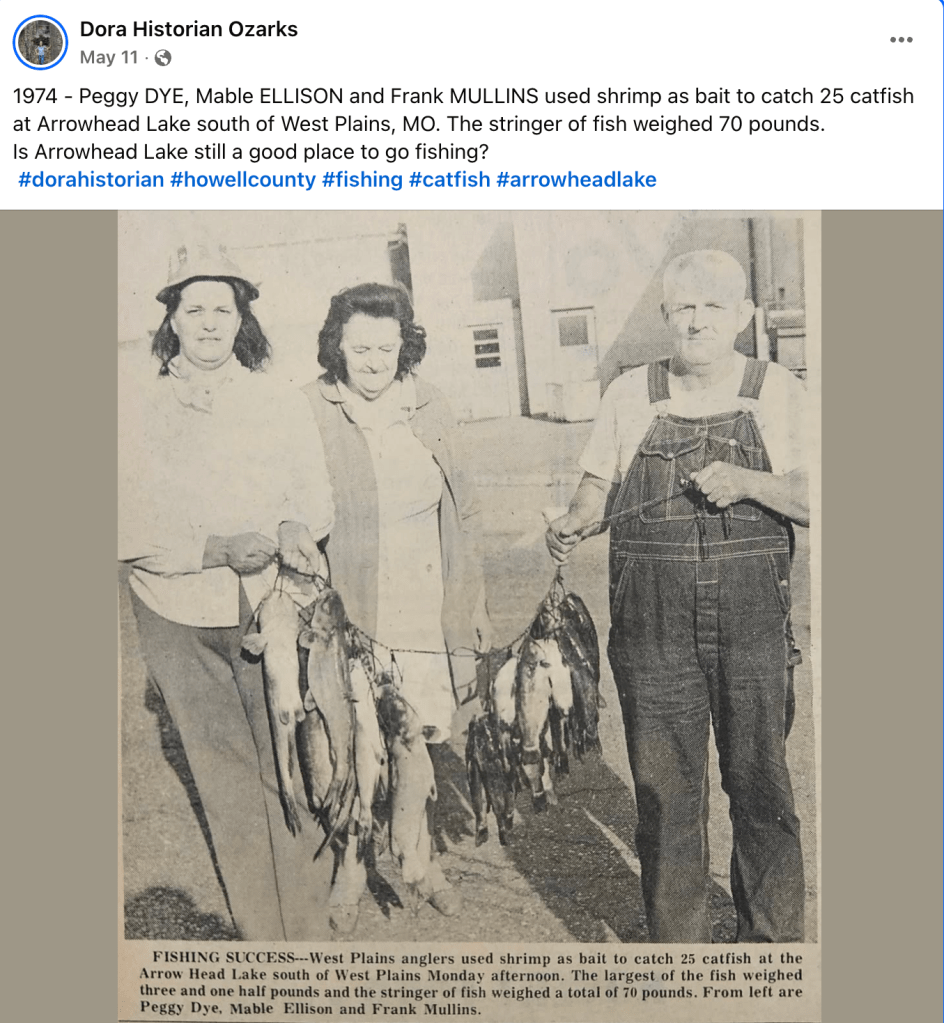
These days people float rivers and hike trails for recreation, but once upon a time these leisure activities we take for granted today were a means of survival. I often think of my how my grandpa was always hunting to keep the freezer full, trapping to sell furs, digging ginseng, gardening, and canning anything and everything. Back then, there was more reliance on the land—not to mention reliance on yourself to get yourself out of a jam. There weren’t cell phones or the internet. There was no Google to turn to for everything. You had to know how to skin a deer and how to catch a fish and how to grow corn and potatoes. You had to know how to survive, period. How was the Dora community, and access to rivers and lakes (etc.), different before cell phones and Dollar Generals and all?
Mary:
I think Ozarks settlers spent most of their time during the spring, summer and fall getting ready for winter. Large families were common and large stores of food had to be put up to make it through the winter months. I think Steel Bridge at Hebron on the North Fork River was one of the first large bridges that connected eastern Douglas County with the West Plains area. When Twin Bridges was built, it was a major celebration, with bands, speeches, and the Missouri governor attending.
But yes, you had to know how to fix things yourself for the most part. Each community had niche small businesses going to help people out. Every town had a blacksmith, for one thing. Enoch Fox moved to Dora, MO in 1929 and was the local blacksmith.

Jim:
One of our favorite pieces of fiction in Issue 5 is a tale of a canoe trip gone wrong. It’s a story about finding yourself in a tough situation and, simultaneously, finding the will to overcome it. Have you ever found yourself in a tight stop on the river? What happened? What did you do? And what effect did this have on your relationship with the river?
Mary:
When I was about 10, we were swimming at Hammonds Camp. I went under and got a mouthful of water and choked, which was scary. Luckily, the current took me to a shallow spot where I could get my footing and get back to the bank. Another time, we were canoeing on the North Fork and my cell phone rang while we were going down a shoal in the middle of nowhere, which threw me for a loop. I think the kids were teens and my instinct was to answer. We ended up getting stuck in a deep-water eddy up against a bunch of sticker bushes. I turn my phone off now, for one thing. It’s crazy to have cell service on the river, but it could be helpful if you got in a real jam. I feel lucky that I haven’t had more close calls. You have to respect the river. You never know what is around the next turn, especially following a flood. I still love floating and fishing and wish Bradley and I spent more time on the water.

Jim:
You were the librarian at Dora School for many years but since retiring have become a full-fledged historian. I imagine there must be a fair amount of overlap between the two vocations, but how has your experience as a librarian informed your research of Ozarks histories? And how have the library sciences changed over the years?
Mary:
Libraries and library sciences have definitely changed as the internet has evolved. Card catalogs are no longer a physical case of alphabetized cards to look through when searching for a book. I removed the reference section at some point in our school library, because more up-to-date and accurate information can now be found in databases and online. I quit saving magazines for the same reason. Almost everything in a library can be found online, even though the feel and experience of reading a physical book, to me, is something that can’t be replaced. And getting rid of the school’s defunct physical collections made room for more books! I really expanded our fiction collection and tightened up the non-fiction. Choosing books to add to the fiction collection became so much easier and more enjoyable. Students were always so excited to see the new boxes of books coming in as they were very much involved in choosing what was added to the collection.
Jim:
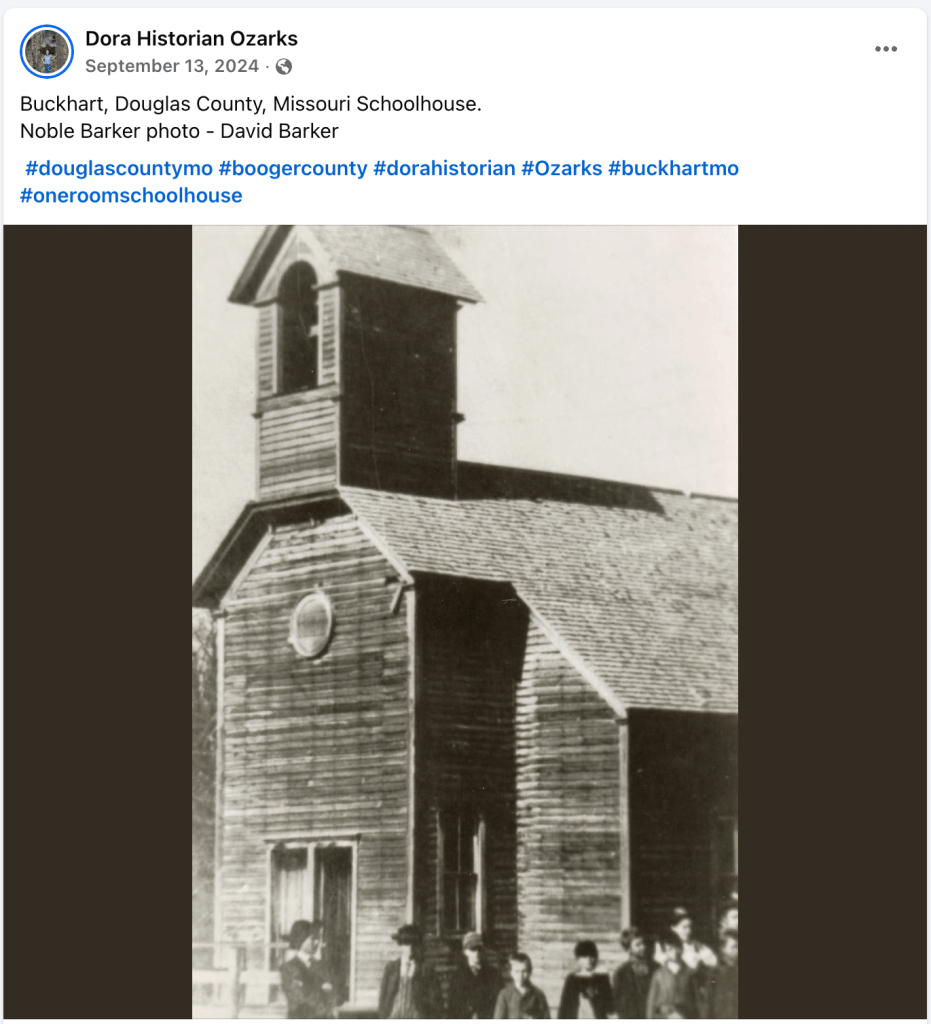
Your social media account, Dora Historian Ozarks, has sparked quite an online following. This hasn’t happened overnight—you’ve been sharing photographs and histories of Ozarks culture, heritage, and environment for several years now—but it seems like just yesterday. How does this process work? Do people send you photographs and histories and so on? (And if so, how can our readers reach you?) Has this project been something you’ve always wanted to do? Any connection with your time as a librarian?
Mary:
The Dora Historian Ozarks page was originally my Dora School Library page. I posted the old Dora yearbooks and some historic Dora photos that people had shared with me and found that people were more interested in the old photos than the library news. Teacher Zach Hamby started an Ozarks History class at Dora School years ago and I started a special “Ozarks” collection in the library to support his class. Developing the collection sparked my interest in Ozarks history even more.
When I retired two years ago, I decided to change the page name and concentrate on local history, which has evolved into a larger area of the Ozarks. People can email photos to me at marycollins11@gmail.com or message them to me through Dora Historian Ozarks.
The Ozarks Research Center at the Garnett Library at MSU-West Plains has been a great resource for the old West Plains Quill articles and other collections. Toney Aid donated his extensive collection of Ozarks real photo postcards of area towns and Ozarks ancestors, which are very interesting.
I love seeing people make family connections on my page. Recently, somebody commented on one of my posts saying, “That’s my grandpa.” Not long after that another person commented on the same picture saying, “That’s my grandpa, too!” I think they knew each, but they had no idea they shared a common grandparent. Similarly, people who live in different states often make cousin connections. Families were so large in past generations and they in turn had big families of their own and may have moved away or just lost touch. It’s very rewarding work.

Jim:
Do you have any new projects on the horizon?
Mary:
I have been helping the Ozark County Historium in Gainesville, MO sort through photos and ephemera that have been donated to them over the years. We are trying to come up with a way to make the photos and their collection accessible online. If you are doing genealogical research in Ozark County, they have an extensive collection and wonderful volunteers. In time I would like to look through the newspaper archives in Ava and Mountain Grove.

Jim:
What are you currently reading?
Mary:
Light summer reading mostly: I’ll What She’s Having by Chelsea Handler, currently. She can be so funny, but also profound. I’ve been binge listening to NPR’s This American Life podcast. I find other people’s life stories so very interesting.
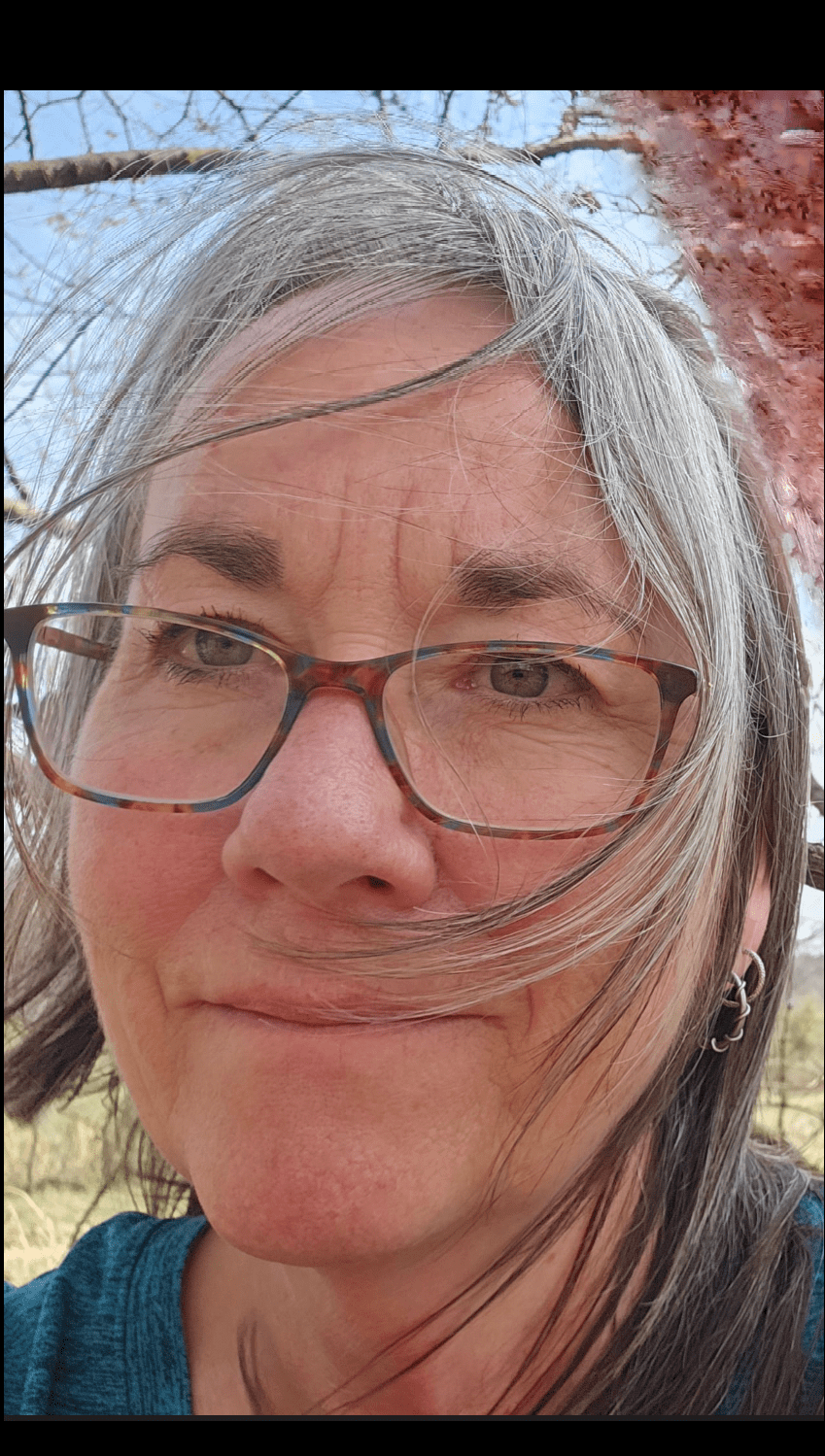
Mary Collins is a historian, a small business owner, an avid river goer,
and the former librarian of the Dora R-III School District in Dora, MO. Recently retired,
she now invests more time than ever into her research of Ozarks histories.
 the water and the gills