
In an Ursula LeGuin story written in the seventies and set in an unspecified future time, Manhattan is under eleven feet of water at low tide, and oyster beds occupy San Francisco’s Ghirardelli Square.
That’s fiction, but it’s a fact that New York City is sinking under its own weight. Relentless construction—the city’s million-plus-and-ever-increasing buildings collectively weigh 1.68 trillion pounds—combine with rising sea levels (nine inches in New York since 1950) foretell eventual catastrophe. In California and globally sea levels rose six inches in that same period and are predicted to rise another six inches in just 20 more years. As many as three-quarters of California’s beaches could be totally eroded, many completely submerged, by 2100.
When I was ten, my family spent two years as live-in caretakers of a cliffside mansion in the San Diego beach town where I grew up. There was no fence at the edge of the bluff, maybe ten yards from the back door. I suffered terrifying nightmares of earthquakes and landslides, the cliff breaking off, us plummeting over the edge. One night I arrived home in the early evening from a friend’s house to find the house empty. I panicked, calling out as I ran from room to room, and finally onto the back patio, “Mom! Dad! Where are you!” Sobbing and fearing the worst, I cut through the trees and growth dividing us from the house next door to get help. And they were, sipping old-fashioned with the neighbor. They were surprised at my terror. They laughed: “Where did you think we’d be?” They assured me of our safety, of the baselessness of my fears. Now coastal erosion is a constant threat on those very cliffs. Houses slip and slide.
Last summer, my husband and I took the train from San Diego to Los Angeles to visit friends. We had to disembark in Oceanside and take a bus to Orange County to circumvent the area where the tracks are dangerously close to unstable cliffs and repairs were being made. In Irvine we boarded another train to complete our trip to L.A. The stretch of rail was repaired and reopened, but it’s experienced several landslides over the past year, each time closing for days, weeks, or months while the cliffside is reinforced—until the next one. The talk is to relocate this and another volatile stretch, seemingly inches from the cliff in Del Mar, further inland. That will take years and billions of dollars. In the meantime, I hold my breath and/or avert my eyes when passing these precarious spots. C’mon, I tell myself; the train’s not going to just slip over the cliff. But then again, couldn’t it?
Our house is on a San Diego canyon, a palm and several towering eucalyptus trees just beyond our patio and deck. Last year Adam, the arborist who trims the trees on our property, showed us where the soil embankment between our patio and the canyon was eroding. A worn and wobbly chain link fence was an eyesore and no protection; it didn’t even deter the skunks, raccoons, and
possums that scuttle and sniff around our bird feeders and trash cans at night. Our new $6,000 retaining wall is a work of art that assures the property’s safety while still welcoming the wildlife. It also replaces the trip to England we’d planned for the fall.
Margaret Atwood’s climate trilogy, Maddaddam, is set in a future where climate change has led to dead zones and lost lands, environmental degradation and civil unrest. The work is speculative fiction, she acknowledges in the second volume, Year of the Flood, but “general tendencies and many of the details in it are alarmingly close to fact.” Evidence of climate change is widespread throughout the world today, in escalating earthquakes and volcanic eruptions, floods and droughts, hurricanes, tornadoes, cyclones, blizzards, tsunamis, landslides, and wildfires. Ozone depletion causing global warming, causing melting polar ice, causing sea level rises, and so on. It gives me a sinking feeling.
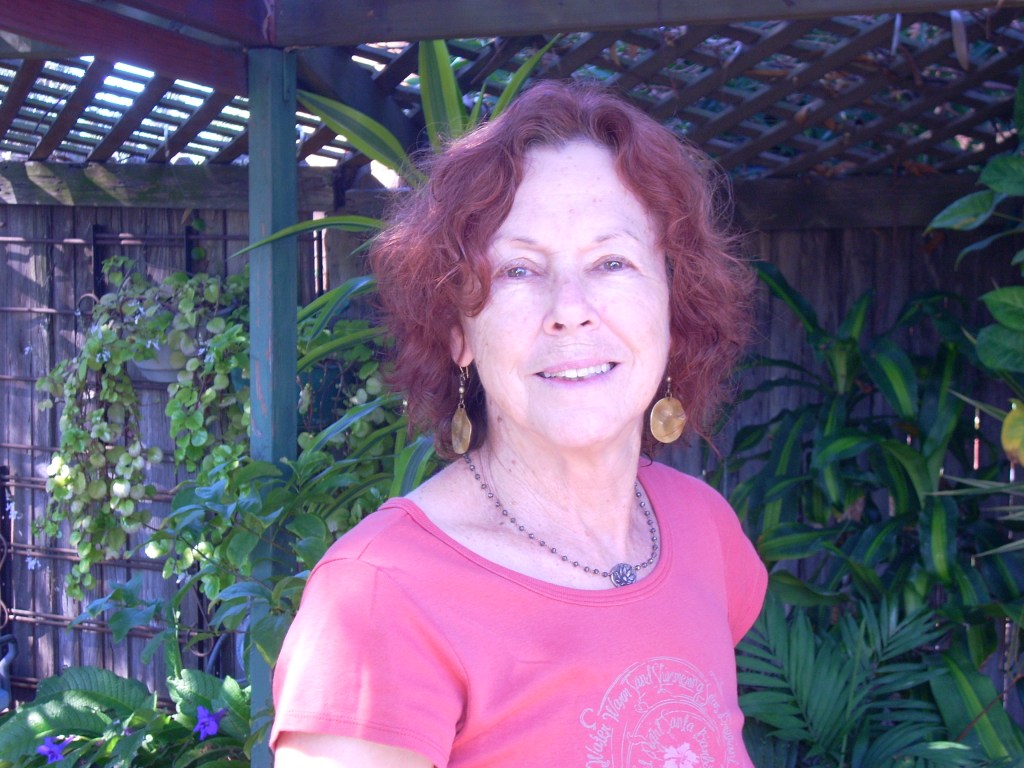
Alice Lowe’s flash nonfiction has been published this past year in Tangled Locks, Big City Lit, ManifestStation, Change Seven, Bluebird Word, South 85 Journal, Eunoia, and Dorothy Parker’s Ashes. She has been twice cited in Best American Essays. Alice writes about life, literature, food and family in San Diego, California. Read and reach her at http://www.aliceloweblogs.wordpress.com.
 the water and the gills