
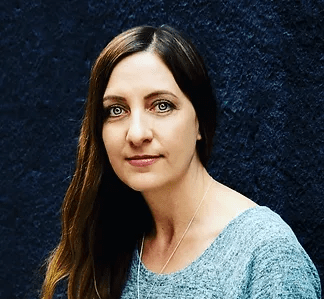
Anybody who’s ever called the Ozarks home shares a particular heritage with the land itself in a way that is unique from the rest of the world. Almost a stereotype, we Ozarkians grew up catching lightning bugs, climbing trees, and tearing through the hills barefoot. We are born of honeysuckle and dogwood and baptized in the rivers that carved the hills. Some of us leave, swearing we will never come back, but when a new friend asks us where home is we’ll always say Southwest Missouri.
Most of us are working writers; we write for our day jobs, side jobs, and as favors to friends, making time for private, personal endeavors when we can. This day-to-day away from the hills and hollers on our work laptops has a way of leaving us “LOL’d” to death, disconcerted with, or embittered by the world around us. Sometimes, it’s hard to see the trees for the forest of obligations of everyday life. It’s a slippery slope, forgetting our roots. Luckily, as writers, we have the power to immortalize our home. And we do–especially those of us hailing from the Ozarks mountains. We do so unconsciously and organically. You can take the writer out of the Ozarks, but you can’t take the Ozarks out of the writer.
It’s a relief when a book comes along which brings us back to specific parts of this vast world. Stigmatized, forgotten, or never fully realized ethereal places have so many stories to tell and the best stories are tied to place. Every so often, a writer appears and gives us something that paints a face and lends a voice to a place they intimately know. Time and again, we are enchanted to find how similar our stories are. Laura McHugh is widely known for her fantastic debut novel, The Weight of Blood in which she douses readers in the sublimity and anxieties of the remote Ozarks. This book was only the beginning of a promising career for this great new novelist who has already followed up her seminal masterpiece with three other incredible tales. And, the word is, she has another novel on the way!
Writers are in a unique position to keep place alive by the very act of writing about it–or to resurrect or resuscitate a region in this way. Do you think in such terms when focusing on lesser talked about areas of the world such as southern Missouri and northern Arkansas?
I always wanted to write about the Ozarks. When I was growing up, it was hard to find any contemporary books set there, or anywhere in rural Missouri. We read The Shepherd of the Hills in school—that was published in 1907. By the time I was writing my first novel, Daniel Woodrell and Gillian Flynn had published popular books set in the Ozarks, and I wondered if there was room for another voice in that niche. Now, there are plenty more, and I’m glad to see it. Obviously, we all hope our books have wide appeal beyond folks living in our native areas, but I think it’s special to see the place you’re from represented in novels, and kids growing up in the Ozarks now have so much more to choose from than I did.
We have the honor of sharing the Ozarks as our home and elements of the landscape appear in our writing. Are there specific images you find yourself returning to as you write, or specific places in the Ozarks that are seared into your mind?
The rivers and caves. I think I have a river in every book I’ve written. I lived on the North Fork of the White River, the water spring-fed, ice cold, clear as glass.
Religion plays a significant role in your latest novel, What’s Done in Darkness. Because Missouri and Arkansas make up part of the Bible Belt, how has the religiosity of the Ozarks influenced your writing and the stories you want to tell?
I was raised Catholic, and there were very few Catholic churches in the areas where I lived, but there was always an abundance of other churches. It was rare to meet anyone who didn’t belong to a church. I would go to church with friends and was always fascinated by the different rules. No dancing, no drinking, certain kinds of music and TV shows off limits. Most teenagers were breaking those rules, but most of them would come back around to the church when they were a little older. It’s a part of life there, and plays into the lives of my characters in various ways. Some are devout and sincere, some hypocritical, some desperate to escape.
The Ozarks have always had a presence in literature. Mark Twain and Laura Ingalls Wilder, for example, wrote novels about growing up and coming of age in this part of the country. In a more modern view, we have Winter’s Bone, Gone Girl, and on Netflix, Ozark. These more modern examples lean towards crime or “Missouri Noir,” if you wanted to think of it as a genre. What do you think of this shift in literature? What do you think about the representation of the Ozarks in these stories?
I love to see the Ozarks represented. That said, I know plenty of people are unhappy with those depictions. I’ve been yelled at in book clubs by individuals who were furious that my books don’t match their personal vision of the Ozarks. Most of the modern books and shows set in the Ozarks are crime-based. By their very nature, they focus on the darker elements of the region. And, importantly—they’re fiction, not documentaries. They’re meant to entertain. If someone had an idyllic Ozark childhood devoid of poverty and crime and wants to write a cheery novel set in the Ozarks, they can do that. There’s room for all kinds of stories. Many regions have stereotypes that we see in literature or on TV, and there’s usually a kernel of truth there. Sure, we might not like certain stereotypes in shows like Ozark, but if you drive down a few rough country roads, you will absolutely see some run-down shacks, outhouses, confederate flags, and individuals who might fit right in on such a show. I write dark things, but with a love of place, and I hope that shines through.
Are there any Midwest authors whom you hold in high regard? In what ways do you think your writing has been influenced by them?
I’ve loved Ray Bradbury all my life, from The Halloween Tree and Something Wicked This Way Comes to his adult novels and hundreds of short stories. He wrote about small Midwestern towns in such magical ways, drawing suspense and horror and expansive ideas from such familiar settings. I always think of a short story of his, a mother waiting for her son to come home—very little actually happens in the story, but the tension and mood and atmosphere are so well-crafted that they completely envelop you. That’s something I keep in mind when I’m writing.
You’ve written four phenomenal novels. Where else do you draw inspiration and ideas from? Do you draw from any true-life events or do your ideas come solely from within?
Much of my work is inspired by true crimes that have taken place in Missouri, often in towns where I used to live. There’s no shortage of material, and so many ways to reimagine those stories.
Reading your work, it’s clear that you grew up in the Ozarks–there’s a depth of detail that cannot be attributed to research alone. The details are what bring the setting to life; it’s likely only someone with lived experience would think to include them. You clearly know the area, but how much do you find research factoring into your writing process?
I tend to do very little research aside from Googling necessary facts as the need arises. When I wrote The Weight of Blood, I was calling upon my past, writing that world from memory and imagination. I threaded in small, vivid details that I’ve carried with me, like splitting open a persimmon seed to predict winter weather, or using pennyroyal to repel ticks. Someone could research and come up with the same details, but I feel like I’ve spent my life collecting all this information, and I love finding ways to use it in my books.
When writing a first draft, one might “follow a voice” as George Saunders suggests in his newest release, A Swim in a Pond in the Rain. For some writers, a character is fully realized before the world around them is created; the characters determine their setting. For others, the world might come into focus first, followed by the characters. Do you find one of these methods works better for you or do you have your own process when piecing together a new story?
With my first novel, setting came first. I didn’t have a story, but I knew I’d find one in the Ozarks, so I began writing about the place. The characters arose from the setting, and the plot came last. But it’s different every time for me. Sometimes I start with a premise, or a crime, or a character. Sometimes it takes a bit of work to find my way into the story, and I don’t impose any rules on myself at the beginning. Whatever small idea excites me, I follow that and see what potential it has. Once I know what the story will be, I do make more of an effort now to think through the structure before committing.
We hear you have a fifth novel coming out soon. How do you begin working on your next book? Is there any overlap in the process or do you focus on one project at a time?
I don’t have a long list of novel ideas, and I don’t usually come up with the next idea until I’m near the end of the book I’m writing. Once I reach the copyediting stage of one book, I’ll start thinking of something new. The overlap comes during the long phase of edits, proofs, and the lead-up to release—during that time I’ll write a pitch for the next project and start writing. My fifth novel, Safe and Sound, will be published April 23rd, 2024, and I’ve just recently pitched the sixth and seventh. At Skipjack Review we strive to foster inspiration for new writers with a focus on the environment and place. What advice would you offer budding writers struggling to find what works for them?
If you were to tell a story about your hometown, or some other place that is meaningful to you, what would you include? What details are you excited to share? It could be good things or bad things, a mix of both. What’s unique to this place? How can those details enrich the story and bring it to life?
With my first novel, I wanted to include bits of wisdom about the natural world that I’d learned growing up in the Ozarks— which wild greens you can eat, which plants ward off ticks—and those things added to the overall world-building and sense of place.
What are you currently reading?
Mister Magic by Kiersten White and Beware the Woman by Megan Abbott. I’m anxiously awaiting Jesmyn Ward’s new book this fall.
PUBLISHED IN SKIPJACK REVIEW #1!
 the water and the gills